


Jun
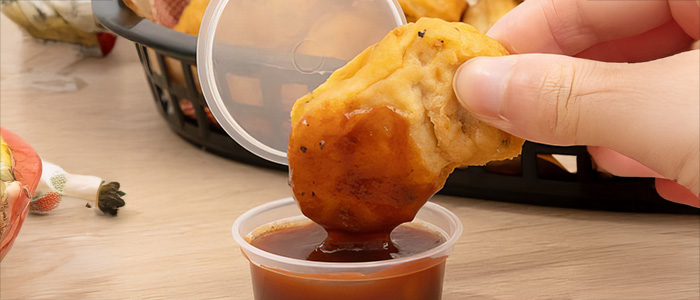
Do dip pots in meal deals trigger VAT in the UK?
Who this will interest: fast food restaurants operators, retailers selling bundled meal deals and others selling bundled goods;
Key point(s): The UK Upper Tribunal decided that cold sauces in dip pots supplied with a hot takeaway meal are separate supplies for VAT purposes and not part of a single supply. As they are separate supplies, the dip pots can be zero‑rated for VAT purposes while the hot meal is a single standard‑rated catering supply.
Essentia’s take: The decision reinforces the view that each situation involving multiple supplies sold under one price must be reviewed on a case-by-case basis. The Upper Tribunal’s decision in this case shows that elements with different VAT rates may retain their individual VAT treatment if it is found that they are not ancillary to another supply.
Action points: Businesses selling multiple items under a single price should review the VAT treatment of their product if the items have different VAT treatments.
In detail
Queenscourt Ltd operates a KFC franchisee and sells “meal deals”, comprising hot items (chicken, fries) and cold items (dip pots, cookies, yoghurts, coleslaw). Queenscourt historically treated meal deals as a single supply of a standard‑rated product.
In 2019 however it started arguing that each individual item in the meal deal should be treated as a separate supply and therefore also retained its VAT treatment. In its view the meal deal was comprised of separate items. It then argued that if these items were standard rated (warm food) and zero rated (dip pot, yogurts, cookies etc) when sold separately, they should have the same VAT treatment when sold as part of a meal deal.
Queenscourt submitted refund requests for previous reporting periods (October 2015 to September 2018) which were partially approved by the UK Tax Authorities (HMRC). Later however HMRC challenged the VAT treatment of the dip pots and sought to recover the amounts paid to Queenscourt.
The matter was brought to the First‑tier Tribunal, which accepted HMRC’s view that the dip pots were ancillary to the supply of warm food and therefore followed the VAT treatment of the main supply, namely standard rated. Queenscourt appealed the decision.
The Upper Tribunal’s decision
The Upper Tribunal decided to overturn the First‑tier Tribunal’s decision. It argued that the meal deal was not a single composite supply in its entirety. It then went on to say that since not all elements of the meal deal are part of a single composite supply, they must be treated individually. Because dip pots would be zero‑rated if sold alone, they remained zero‑rated when included in the bundle.
This is an unusual approach since it assumes that if all elements are not part of a single supply, then all elements are individual. This approach is not present in any previous case law which means it may have important ramifications if not overturned at a later stage of the appeal process.
Impact for businesses
Businesses selling multiple items under a single price (e.g. meal deals) should review the VAT treatment of their product if the items have different VAT treatments (e.g. different VAT rates).
If the arguments used by the Upper Tribunal are not overturned at a later stage of the appeal process, businesses in the fast food sector or retailers or other companies selling bundled products should consider whether they should revise the VAT treatment of their supplies.
The decision potentially opens the door for refunds if businesses have applied the standard rate on supplies comprised of multiple elements, where some would be subject to a reduced rate if sold individually. Equally, HMRC might change its approach and review bundled supplies in line with this approach.
If you would like to further discuss the VAT treatment of bundled supplies or need help assessing the VAT treatment in similar cases, please reach out to us.