


Oct
EU Court of Justice provides important decisions on the VAT treatment of the sale of trade and business
Who this will interest: businesses selling their trade and assets, companies undergoing corporate restructuring, business owners considering estate planning;
Key point(s): splitting the transfer of trade and assets of a business may trigger VAT. However, a free of charge transfer may not in some cases. Separately, if property remains with the transferor while the rest of the business is transferred out, it should be reviewed whether any adjustments are required in relation to VAT paid on buying or renovating that property.
Essentia’s take: The decision provides welcomed clarity in certain cases that we often see in corporate restructuring and estate planning;
Action points: These recent decisions show the importance of carefully reviewing the transfer of trade and assets and its impact from a VAT point of view in advance of any transactions taking place. The impact on a business of having to charge VAT or making adjustments following such a transfer can be significant.
In detail
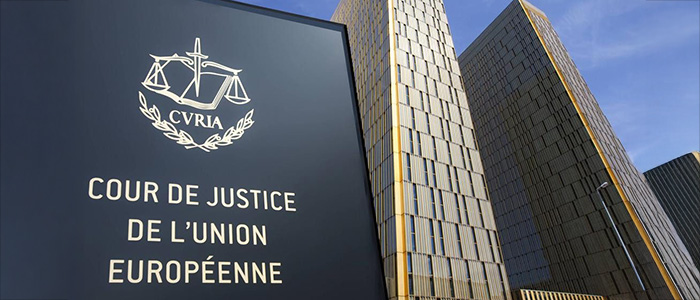
The Court of Justice of the European Union (CJEU) has published its decision in three cases concerning the VAT treatment on the sale of trade and assets.
For context the sale of the trade and assets of a business is normally subject to VAT. However, if the trade and assets being transferred can function as a standalone business then the sale is VAT free as the transfer of a going concern (TOGC) falls outside the scope of VAT. Even though no VAT is charged, the transferor retains the right to recover VAT on its purchases related to the sale.
While the rules may not seem particularly complex, in practice there are many issue on how these provisions should be interpreted and applied. The CJEU has recently issued three decisions on this matter:
Case T-397/25 – A&P Deco – VAT adjustment after transfer
In this case A&P Deco, a Belgian based business was operating a garden centre. The business sold and transferred its trade and assets to another business with the exception of the property. The transfer of the trade and assets was VAT free being considered a transfer of a going concern.
The property was leased to the new owner of the trade and assets so they could continue their activity in the same location. The property was let under a VAT exemption which does not give right to recover VAT on costs associated to the property. The Belgian Tax Authorities therefore adjusted VAT that had previously been recovered by A&P Deco on the purchase and renovation of the building.
A&P Deco tried to argue that the letting of the property was linked to the transfer of the trade and assets and therefore an adjustment should not be triggered.
Decision: The CJEU disagreed and stated that the letting was separate from the transfer of the trade and assets and the standard VAT rules applied. As such the Belgian Tax Authorities were correct in adjusting the VAT.
Takeaway: This set up where the trade and assets of a business are sold but the property is kept and let to the buyers is used often. The decision of the CJEU provides clarity on the matter and outlines that the standard rules for VAT exemption apply, even though a VAT free transfer of trade and assets has previously occurred. In other words, in such cases, it is possible an adjustment of the VAT previously recovered may be required.
Case T‑413/25 Peckeger – free of charge transfer
An Austrian private individual (FR) owned and let several properties. FR was also the sole shareholder in a business (R). FR transferred the properties to R free of charge and considered that no VAT was due as the transfer was a VAT free transfer of a going concern (TOGC). The Austrian authorities disagreed and considered that VAT should have been charged on the transfer arguing that VAT should be charged on the provision of goods free of charge under Austrian Law. Furthermore, in such cases the law did not allow a VAT free TOGC to take place.
The case was referred to the CJEU. Aside from having to answer whether the interpretation of the Austrian authorities was correct, the CJEU was also asked if EU law superseded Austrian law since one of the provisions
Decision: The CJEU agreed the transfer of the properties into R is a supply free of charge and VAT should be assessed under normal circumstances. However, the Court also established that EU law allows even transfers free of charge to be considered a TOGC and therefore VAT free. In this case EU law directly contradicted Austrian law and the CJEU outlined that the former applies directly and supersedes the local rules.
Takeaway: In this specific case it seems that it may be possible to have a VAT free transfer of properties even when provided for no consideration. However, the rules governing the transfer of trade and assets are complex and sometimes reliance on EU law may be required.
Case T‑366/25 (Szytelbiecka) – splitting then reuniting the assets
The case revolves around a person established in Poland (D.B.) who intended to donate her business via a transfer of trade and assets to her two daughters, each receiving 50%.
After receiving the shares, the two daughters wanted to place the shares into a jointly owned general partnership through which the business would continue its activity.
The tax payers took the view the above would qualify as a VAT free transfer of a going concern.
D.B. applied for a ruling in advance with the Polish Tax Authorities. The authorities issued a tax ruling where they outlined the conditions for a VAT free transfer TOGC were not met as the transferees did not undertake the same activity as the transferor and the newly formed partnership was in fact different to the transferees. The CJEU was asked if the transfer from D.B. to the two daughters qualified as a VAT free TOGC.
Decision: The Court outlined that the two daughters were able to dispose of the transferred property as owners without the other’s consent. The transfer into the partnership was also not mandatory for either party. Therefore the transfer of the assets into the partnership was separate from the initial transfer from D.B. to the daughters and should be reviewed as such.
Additionally, if the two halves of the business could not function as separate businesses, then the transfers from D.B. to the daughters and from there to the partnership could not qualify as a VAT free TOGCs.
Takeaway: Splitting and then recombining trade and assets may lead to losing the VAT free status of the TOGC. This is an important decision for those considering estate and business planning as it shows there might be a VAT angle in such cases as well.